
Could a simpler skincare routine be a better place to start than a shelf full of active ingredients? With so many product types to compare, it’s easy to lose sight of what your skin needs most. Focusing on one priority can make it easier to choose skincare that feels manageable.
If you’re weighing up options for blemishes, hydration or visible signs of ageing, start with your main concern. Then consider your skin’s tolerance and the steps you already use. Introducing one new product at a time can help you make considered changes without overcomplicating your routine.
This guide explains how to compare skincare by concern, routine and product type, so you can narrow down a suitable category without chasing every trend. You’ll also find a practical way to weigh individual products against curated sets, with examples from Hellen D'or’s collection, including the Blemish Purifying Face Wash and Anti-Age Peptide Collection.
Key Takeaways
- Choose skincare by your main priority and how a product fits the routine you already follow.
- Compare product types by their role, then check the product details before deciding.
- More steps or active ingredients don’t automatically make a routine more suitable. Keep your shortlist focused.
- Weigh individual products against curated sets for routine coverage and flexibility, especially if you already own some essentials.
- Explore Hellen D'or’s range by product type and stated focus, and check current details before choosing.
How to choose skincare that fits your skin and daily routine
A crowded skincare range can make even a simple purchase feel uncertain. Start with one priority, not a long list of hoped-for changes. Are you looking for a cleanser, more hydration, or a product suited to blemish-prone skin? A clear starting point helps you compare relevant options without being distracted by every claim or trend.
Think about what you already use, how your skin tends to respond to new products, and the textures or formats you prefer. A useful comprehensive overview of skincare also explains the difference between cosmetic care and dermatological care. Cosmetic products may support your personal care goals, but they aren’t a substitute for medical advice or treatment.
Start with one skincare concern, not a long wish list
Choose the need that matters most right now. Product categories have different roles, so matching the format to your priority is a practical first filter:
- Cleanser: a wash-off step for cleansing the face.
- Moisturiser: a leave-on product to consider if hydration is a priority.
- Eye-care product: a targeted format for the eye area.
- Serum: a concentrated leave-on format to compare with a specific concern and the rest of your routine.
For example, if cleansing is your priority, compare facial cleansers before adding a product for a separate goal. Hellen D'or’s range includes the Blemish Purifying Face Wash. Its name indicates a product type and focus, not a promise to treat a skin condition or deliver a particular result. Individual experiences vary.
Consider skin tolerance and the routine you can maintain
Before buying, read the full ingredient and usage information on the product listing. Check whether the instructions suit your existing routine and whether you’re comfortable with the format. If you’ve previously found certain products uncomfortable, consider that experience when comparing options rather than choosing by claims alone.
Keep your routine manageable. A product you can use consistently may be a more considered choice than several new additions at once. Introduce unfamiliar products gradually, following the stated directions, so it’s easier to notice how your skin responds. If irritation develops, stop using the product. Seek advice from a healthcare professional if you’re concerned, particularly if symptoms persist or worsen.
Skincare can support personal care goals, but it won’t produce identical results for everyone. Begin with one relevant category, assess how it fits your routine, and only then decide whether another step is worth considering.
Which skincare product types and ingredients are worth comparing?
Once you’ve chosen a priority, compare products by their place in a routine, not just by their headline claims. The format gives you a useful first filter, whilst the product listing and directions help you assess whether it suits your preferences and existing steps.
Choose between a cleanser, serum, moisturiser or mask
Cleansers are wash-off products used to cleanse the skin. Serums, moisturisers and eye products are leave-on formats with different intended roles, so check the product description rather than assuming a serum is stronger or more effective. Masks are an optional addition, not a necessary step for everyone. Sets may group products together, but check what’s included and whether each item fits your routine.
| Product type | Typical routine role | Questions to check before buying |
|---|---|---|
| Cleanser | Wash-off cleansing step | Does the format and usage guidance suit your routine? |
| Serum | Leave-on step for a stated focus | What does the description say, and how should it be used? |
| Moisturiser | Leave-on hydration step | Does the texture suit your preference and other products? |
| Eye product | Targeted step for the eye area | Are the directions and intended use clear? |
| Mask | Optional addition to a routine | Is it a format you’ll use, and how often do the instructions advise using it? |
| Set | Several products grouped together | Will you use each item, or do you already own similar products? |
Assess ingredient information without following every trend
Niacinamide, hyaluronic acid, peptides and retinoids are ingredient terms you may encounter during product research. Don’t assume any one is included because a product belongs to a particular category or makes a broad claim. Check the full ingredient list and directions on the individual listing.
Suitability depends on the complete formula, how a product is used and your individual tolerance. The skin barrier is the outer layer of skin that helps limit water loss and protect against external irritants. That context can help you assess product information without treating a single ingredient as a guarantee of a particular outcome.
For a considered comparison, browse Hellen D’or’s skincare collection and review each listing for its format, ingredients and usage instructions before adding a product to your routine.
How to compare skincare options and avoid common buying mistakes
A longer routine isn’t automatically a better one. Adding several products or active ingredients at once can make it harder to tell which steps suit you, and may leave you with products that don’t fit your habits. Compare each option against a clear need, your current routine and the information provided on its listing.
Look beyond prominent claims. Check the product format, stated purpose, full ingredient list and directions for use. Consider whether you already own something for the same routine role, and whether the instructions are practical for you. Avoid treating claims as guarantees of results, clinical benefits or suitability for everyone. If you have known sensitivities, review the product details carefully and seek professional advice if you’re unsure.
When a curated skincare set may suit your needs
A set may be worth considering if you’re looking for several products together or prefer to compare a grouped selection with buying individual products. Hellen D’or’s Anti-Age Peptide Collection is one example to review. Before choosing any set, check exactly which products and sizes are included, what each is intended for and whether the items complement, rather than duplicate, products you already use.
Individual products can offer more flexibility if you need only one category or want to introduce a single new item. A set may offer a broader selection, but that’s useful only if its contents match your priorities. Compare the listing details rather than assuming every included product is necessary.
Mistakes that can make a skincare purchase less suitable
Popularity alone isn’t a reliable selection method. An ingredient or trend may attract attention, but the full formula, directions and your own tolerance matter more than a headline. Likewise, buying several unfamiliar products together can make it difficult to identify which one suits your routine if you experience irritation or simply find the combination impractical.
- Check for overlap: Compare a potential purchase with the products you already use.
- Read the directions: Confirm how the product is intended to be used before adding it to your routine.
- Review sensitivities: Check the ingredient information and consider past reactions.
- Choose for flexibility: Decide whether one product or a set better matches your current needs.
For a closer look at available formats and listing details, explore Hellen D’or’s skincare collection. Check current availability and each product’s information before making your shortlist.
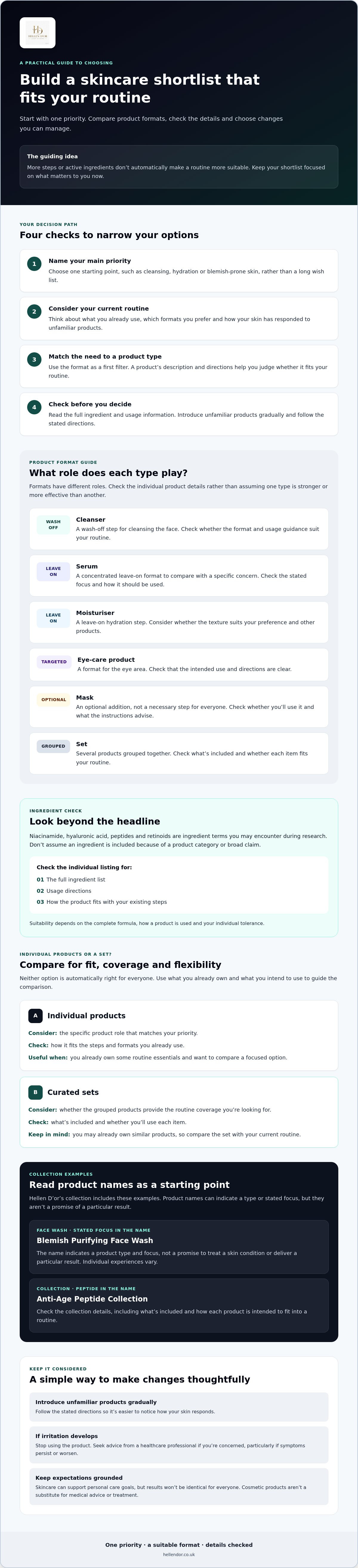
How to build a considered skincare shortlist for your needs
A useful shortlist turns browsing into a clear comparison. Start with the concern or routine gap that matters most to you, then identify the product type that relates to it. Check what you already use before considering additions. This keeps your selection focused and helps avoid buying a product that duplicates an existing step.
Make a shortlist from your priority and current routine
Write down your main priority, such as cleansing, hydration or eye care, and note the category you want to compare. Next, list the products already in your routine and what role each one serves. You may find you need a replacement rather than another step. Compare a small number of relevant options using the same criteria, such as format, stated purpose, ingredients, instructions and texture preferences.
There’s no single routine that everyone needs to follow. Think of essential categories as the ones that serve your personal routine goals. Other formats, such as a mask or an additional serum, are optional if they don’t address a clear need or fit comfortably alongside what you already use.
- Define: Identify one priority for your shortlist.
- Select: Choose the product type that best matches that priority.
- Check: Review the product details, directions and any stated cautions.
- Compare: Assess a few suitable options against the same criteria.
Check product details before making a final choice
Read the full product description and ingredient information, then check how the product should be used. Look for any stated cautions and consider whether the instructions work with the products already in your routine. If the listing doesn’t answer a question about use or compatibility, don’t assume. Check for further information before deciding.
Availability and delivery terms can change, so confirm the current details on the relevant product page before purchase. If you’re comparing an individual product with a set, check the contents and sizes listed, then consider whether each item has a place in your routine.
Use this process to create a skincare shortlist that reflects your priorities rather than a trend or a crowded shelf. If skin symptoms persist or concern you, seek advice from a qualified healthcare professional instead of relying on cosmetic products for assessment or treatment.
Ready to compare formats against your routine? Browse Hellen D’or’s skincare collection and review the current product details as you build your shortlist.
Explore Hellen D’or skincare products by concern and format
To narrow your options, compare each product’s format and stated focus with the priority you identified. Hellen D’or’s range includes facial cleansers, hydrogel eye patches and anti-age collections, as well as hair and body washes. Product names and descriptions can guide your browsing, but they don’t guarantee a particular result. Check the current range and availability before choosing.
Match confirmed skincare products to the concern you want to prioritise
If you’re looking for a cleanser to consider for blemish-prone skincare, the Blemish Purifying Face Wash is a relevant format to review. Check its full listing and directions to decide whether it fits your routine. For eye care, Hellen D’or’s range includes Anti-Age Hydrogel Eye Patches and Anti-Fatigue Hydrogel Eye Patches. Compare their stated focus and directions with your preferences.
The Anti-Age Peptide Collection is another option to consider if you’re comparing products grouped around an anti-age focus. Review the listing for its contents and usage details before deciding whether it suits your routine. Hellen D’or also offers the Anti-Aging Performance Duo. Check the product details for what’s included and whether those items complement products you already use.
Compare individual products with curated collection boxes
An individual product may be a more flexible fit if you’re looking for one specific format. A set may be worth exploring if you want to compare a grouped selection. The Anti-Age Peptide Collection and Anti-Aging Performance Duo are examples of sets in Hellen D’or’s range. Check each listing for the products and sizes included, their stated descriptions and whether they duplicate items you already own.
Use the same checks across formats: product purpose, full ingredient information, directions and any stated cautions. This makes it easier to assess whether a cleanser, eye product or set relates to your chosen priority, without assuming that a collection will suit everyone.
For another comparison point, review the individual product and set options in Hellen D’or’s skincare collection. Check current product details and availability, then choose the format that feels most compatible with your routine.
Choose your next skincare step with confidence
A considered routine starts with one clear priority. Match it to a product type, then review the full listing, ingredients and directions before deciding. You don’t need to add more steps simply because they’re available. Choose options that fit your existing routine and preferences.
Hellen D’or’s range includes facial cleansers, hydrogel eye patches, anti-age collections, body care and hair and body washes. Review the individual listings to see what’s currently available and whether a product aligns with your routine goals. Orders are shipped from the United Kingdom, with free delivery on orders over £100.
Explore the Hellen D’or skincare collection to compare available products and their details. Keep your shortlist focused and choose a considered next step for your routine.
Frequently Asked Questions
How do I choose skincare for my skin type?
Choose skincare by considering how your skin feels, what you want your routine to do and how it responds to products. Note whether it tends to feel dry, oily, sensitive or comfortable, then compare relevant product formats and their full ingredient lists. Skin can vary over time, so avoid treating a label as a diagnosis. If you have persistent symptoms or uncertainty, ask a qualified healthcare professional for advice.
What skincare products should a beginner start with?
Start with only the product categories that meet your current needs, rather than buying a complete routine at once. A cleanser may suit someone looking for a wash-off cleansing step; a moisturiser may be relevant if hydration is a priority. Check the directions and ingredients, and add unfamiliar products one at a time. There’s no universal starter routine, so keep the first choices simple and manageable.
Can I use a serum and moisturiser together?
Often, a serum and moisturiser can be used in the same routine, provided both products’ directions allow it and the combination feels comfortable for you. Check the product instructions for how and when to apply each one. If you’re adding a new serum, introduce it separately from other unfamiliar products so you can observe how your skin responds. Stop using a product if irritation develops.
Are skincare sets better than buying individual products?
Neither format is automatically better. A set may suit you if its products cover routine categories you want to explore, whilst individual products allow you to select just one format or concern. Check the exact contents, sizes, ingredients and directions before choosing a set. Compare these with products you already own, so you can spot overlap and decide whether every item has a place in your routine.
How often should I introduce a new skincare product?
Introduce unfamiliar products gradually, following the directions on each listing. Adding one new product at a time makes it easier to notice how your skin responds, rather than changing several parts of your routine together. There isn’t one suitable schedule for every product, so check its usage guidance and any stated cautions. Stop if irritation develops, and seek professional advice if symptoms persist or concern you.
What is the difference between a face wash and a serum?
A face wash is a cleanser used on the skin and rinsed away according to its directions. A serum is a leave-on product with a stated routine focus, so its application and use depend on the individual product. They aren’t interchangeable formats. Check the full description and instructions to understand each product’s role, then consider whether it fits your existing routine before buying.
How can I compare anti-ageing skincare products?
Compare anti-ageing products by their format, stated focus, complete ingredient list and directions, rather than relying on the name or a broad claim alone. Consider whether you’re looking at a collection or individual product, and whether it duplicates something you already use. For example, review the details for the Anti-Age Peptide Collection before deciding. Cosmetic results vary, so don’t treat claims as guarantees.